
Introduction
Many professionals ask whether a Power Platform Architect can really reach ₹40 LPA opportunities in today’s market.
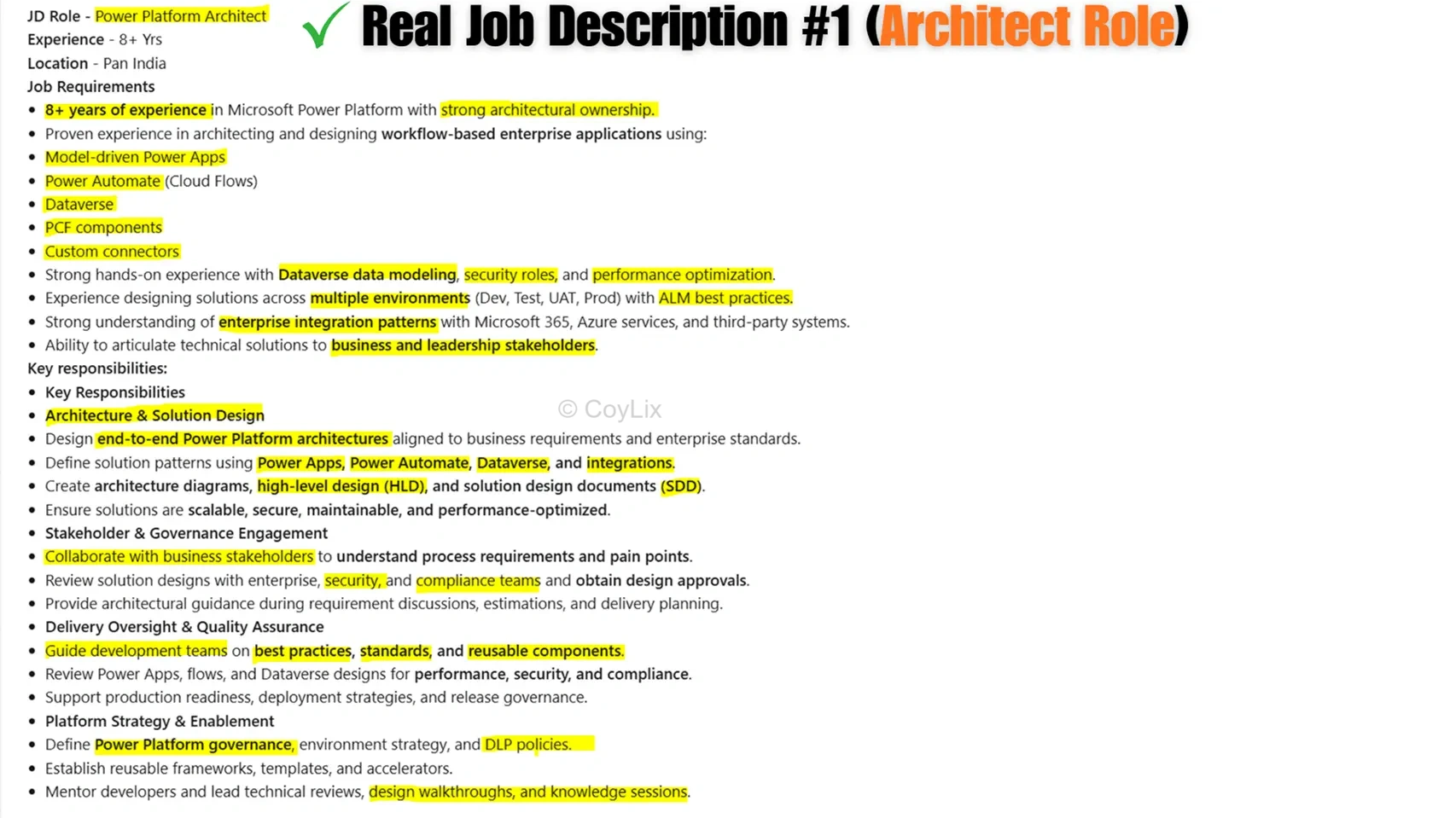
The analysed openings were in the ₹35 lakh to ₹45 lakh range and focused on architect-level ownership. Companies were looking for professionals who can handle complete solution design, governance, integrations, scalability, Dataverse architecture, ALM strategy, stakeholder communication, and delivery leadership.
This article breaks down exactly what companies were asking for in those real Power Platform Architect job postings using only the original requirements shared in the source material.
Also explore Power Apps Skills Roadmap and Power Platform Core Interview Questions.
Power Platform Architect Skills Companies Want
1. Why Do ₹40 LPA Power Platform Architect Roles Ask for 8+ Years of Experience?
The real job descriptions asked for 8+ years of experience, but this requirement was not only about time spent in the industry.
Companies wanted professionals who had already handled complete solution ownership. That included requirement gathering, end-to-end solution design, Power Platform architecture planning, scalability thinking, security mindset, and final delivery accountability.
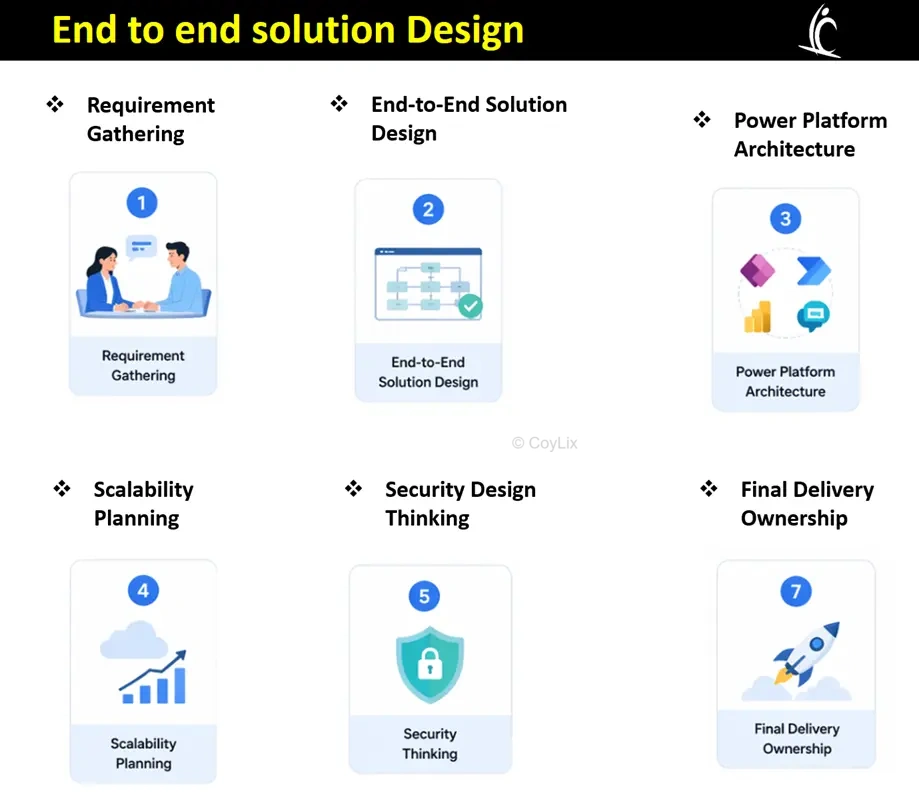
This means senior roles are measured by ownership and decision-making ability, not only years of experience.
If someone has created apps but never owned enterprise delivery, they may still struggle at this level.
2. Why Were Model-Driven Apps Specifically Mentioned?
One company specifically asked for Model-Driven Apps in a Power Platform Architect role, which shows this was not a Canvas Apps-only opportunity.
At architect level, companies expect professionals to understand when Model-Driven Apps are the right fit compared to Canvas Apps.
The real expectations included:
- Model-Driven vs Canvas decision making
- Advanced Dataverse schema design
- Security architecture
- Form and view performance tuning
- Plugins vs Flows strategy
- Scalable governance model
This shows companies want business-driven platform decisions, not only screen design skills.
3. What Level of Power Automate Was Expected?
The job descriptions did mention Power Automate, but not for beginner automation.
They wanted professionals who can automate complete enterprise processes. That means workflows designed for scale, maintainability, and reliability.
The required mindset included:
- Enterprise automation design
- Approval processes
- Child flows and reusable architecture
- Error handling and retry logic
- Performance optimization
- Flow vs Plugin vs Logic Apps decision making
This is important because high-paying roles are about choosing the right tool, not using one tool everywhere.
4. Why Was Dataverse One of the Most Important Skills?
Dataverse was one of the strongest repeated expectations in the real job postings.
That makes sense because Dataverse is the backbone of many enterprise Power Platform solutions.
Companies expected strong capability in:
- Data modeling and table design
- Relationships and schema planning
- Security roles and access control
- Business units and team ownership
- Performance optimization
- Handling large data volumes
- Auditing and compliance
- Scalable architecture planning
If the data foundation is weak, the application layer also becomes weak. That is why architect roles value Dataverse heavily.
5. Why Are PCF Components Considered Premium Skills?
PCF Components were listed as a premium expectation because they help extend Power Platform beyond standard controls.
Companies were looking for professionals who understand when custom controls are necessary and when standard controls are enough.
The real learning expectations included:
- TypeScript and React basics
- When standard controls are sufficient
- When PCF Components are justified
- Reusable controls across multiple apps
- Performance impact review
- Licensing awareness
- Governance and code review
This shows that customization alone is not enough. Enterprise control and maintainability also matter.
6. Why Did Companies Ask for Custom Connectors?
The job descriptions also asked for Custom Connectors because enterprise solutions rarely stay inside one platform.
Companies need Power Platform solutions to communicate with external systems, APIs, and business applications.
The expected knowledge areas included:
- When to use Custom Connectors
- Secure authentication setup
- Reusable connectors across multiple apps
- Data security practices
- API limits and throttling awareness
- Licensing impact
This reflects real enterprise demand where integration is often more valuable than isolated app building.
7. Why Is ALM Experience Important for Architect Roles?
One real job description specifically asked for experience across Dev, Test, UAT, and Production environments with ALM best practices.
This means companies were hiring people who understand controlled delivery, not only development.
The expected areas included:
- Environment strategy design
- Dev, Test, UAT, Prod usage
- Solution lifecycle management
- Managed vs unmanaged solutions
- Deployment pipelines
- Version control and release planning
- Rollback and risk management
- ALM best practices
At senior salary levels, companies expect stable releases and governance maturity.
8. Why Were Integration Skills Repeatedly Mentioned?
Another strong requirement was solution design across Microsoft 365, Azure services, and third-party systems.
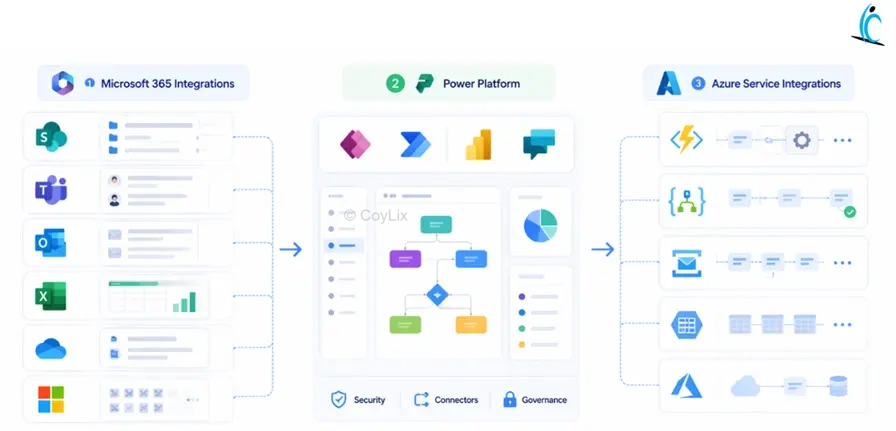
This means companies wanted architects who can connect business systems smoothly and securely.
The real expectations included:
- Microsoft 365 integrations
- Azure service integrations
- Third-party system connectivity
- Real-time vs scheduled integrations
- Secure data exchange
- Scalable integration design
- Monitoring and reliability
Enterprise platforms rarely operate alone. Integration capability becomes a major differentiator for high-paying roles.
9. Why Is Stakeholder Communication Critical?
One real JD line specifically mentioned the ability to explain solutions to stakeholders.
This is where many technical professionals struggle. They know tools, but cannot explain business value clearly.
Companies wanted professionals who can:
- Explain technical solutions simply
- Show business benefits
- Discuss cost, risk, and impact
- Present with confidence
- Use communication as a leadership skill
At architect level, communication can be as valuable as technical ability.
10. What Extra Skills Appeared in the Second Job Description?
The second real Architect / Lead job description had similar core expectations, but two extra skills stood out.
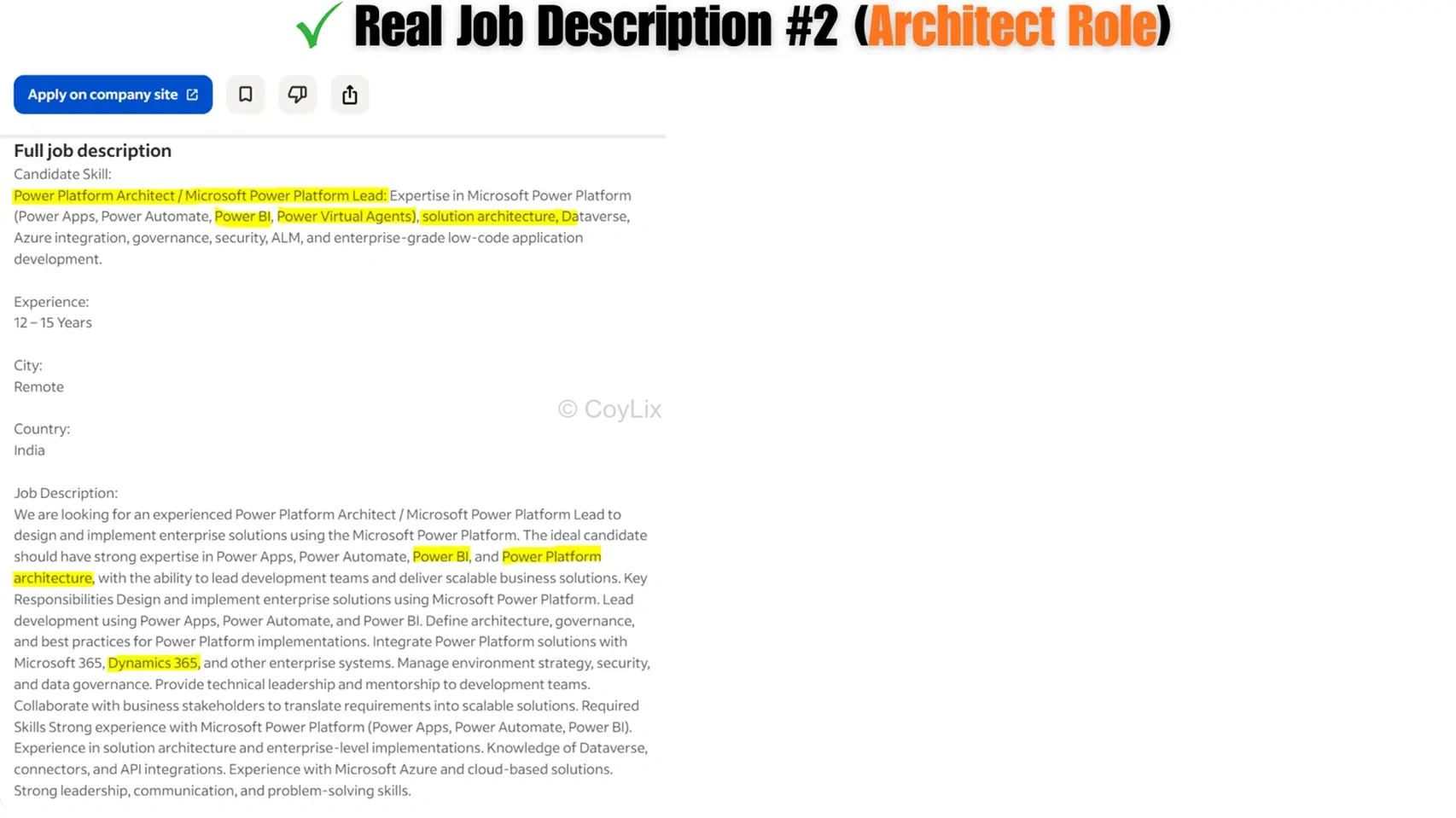
Power BI
This was not about basic report creation. It reflected analytics architecture thinking.
- Executive dashboard planning
- Reporting source planning
- Trusted data sources
- KPI consistency
- Multi-system reporting
- Access and governance
Power Virtual Agents
This was also not about simple chatbot creation. It reflected service automation thinking.
- Self-service support
- Smart chat experience
- Human escalation paths
- Teams and web integration
This shows some companies expect architects to think across apps, automation, analytics, and AI experiences together.
11. What Is the Real Message Behind ₹40 LPA Power Platform Roles?
The real market signal from these job descriptions was clear.
High-paying Power Platform roles are not about only creating apps or flows. They are about owning enterprise outcomes.
That includes architecture, governance, integrations, performance, communication, leadership, and delivery accountability.
If your goal is to reach this level, start building these skills one by one.