
In Microsoft Dataverse, relationships define how records in one table connect to records in another, allowing you to build richer data models and enable seamless integration across apps.
There are three main types of relationships:
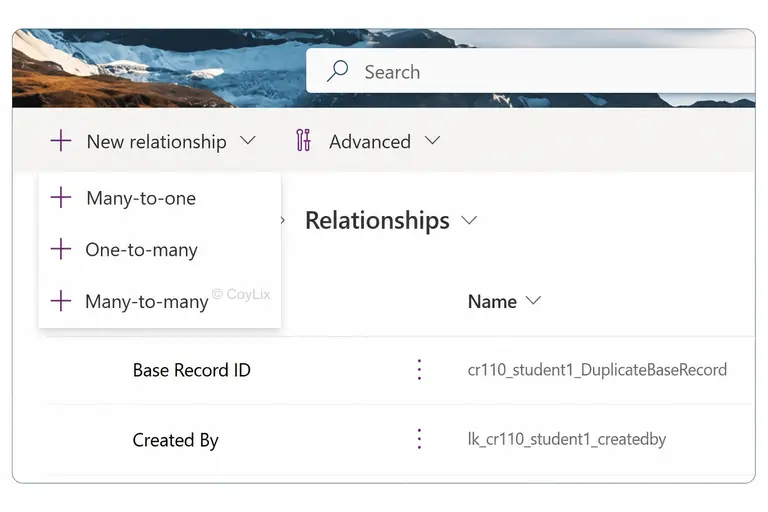
- One-to-Many (1:N): One record in a table can relate to many in another.
Example: A single Customer can have multiple Orders. This is implemented by adding a lookup column in the related table (e.g., Orders → Customer). - Many-to-One (N:1): The reverse of 1:N, where multiple records relate back to a single record.
Example: Multiple Orders link back to one Customer. - Many-to-Many (N:N): Multiple records in both tables can relate to each other.
Example: A Student can enroll in many Courses, and each Course can have multiple Students. Dataverse handles this using an intersect (junction) table.
By defining these relationships, Dataverse ensures data integrity, supports relational queries, and provides flexibility in app design without requiring complex coding.